
Bio-Kompetenz fordern und fördern
Wir entwickeln privatrechtliche Standards im Food- und Non-Food-Bereich und unterstützen Verbündete bei der Standardentwicklung.
Bio-Kompetenz fordern und fördern
Wir entwickeln privatrechtliche Standards im Food- und Non-Food-Bereich und unterstützen Verbündete bei der Standardentwicklung.
Bio-Kompetenz fordern und fördern
Wir entwickeln privatrechtliche Standards im Food- und Non-Food-Bereich und unterstützen Verbündete bei der Standardentwicklung.
Was soll der ARGE BIO-Standard erreichen?
Der ARGE BIO-Standard setzt auf den gesetzlich vorgegebenen Bio-Richtlinien auf und definiert darüber hinausgehend Kriterien. Diese sollen die Sicherheit von Bio-Produkten gewährleisten, Schwachstellen abdecken und berechtigte Konsument:innenerwartungen erfüllen.
Was soll der ARGE BIO-Standard erreichen?
Der ARGE BIO-Standard setzt auf den gesetzlich vorgegebenen Bio-Richtlinien auf und definiert darüber hinausgehend Kriterien. Diese sollen die Sicherheit von Bio-Produkten gewährleisten, Schwachstellen abdecken und berechtigte Konsument:innenerwartungen erfüllen.
Was soll der ARGE BIO-Standard erreichen?
Der ARGE BIO-Standard setzt auf den gesetzlich vorgegebenen Bio-Richtlinien auf und definiert darüber hinausgehend Kriterien. Diese sollen die Sicherheit von Bio-Produkten gewährleisten, Schwachstellen abdecken und berechtigte Konsument:innenerwartungen erfüllen.
Wer steht hinter dem Standard?
Als entscheidungsbefugtes Gremium zeichnet der Vorstand der ARGE BIO für die Zielformulierungen und Prüfkriterien sowie für den vorgegebenen Prüfprozess samt Bewertungssystem des ARGE BIO-Standards verantwortlich.
Wer steht hinter dem Standard?
Als entscheidungsbefugtes Gremium zeichnet der Vorstand der ARGE BIO für die Zielformulierungen und Prüfkriterien sowie für den vorgegebenen Prüfprozess samt Bewertungssystem des ARGE BIO-Standards verantwortlich.
Wer steht hinter dem Standard?
Als entscheidungsbefugtes Gremium zeichnet der Vorstand der ARGE BIO für die Zielformulierungen und Prüfkriterien sowie für den vorgegebenen Prüfprozess samt Bewertungssystem des ARGE BIO-Standards verantwortlich.
Wie setzt sich der ARGE BIO-Standard zusammen?
Die Version 5 des ARGE BIO-Standards besteht aus 10 Modulen. Modul 1 beschäftigt sich mit der Sicherheit von Bio-Produkten. Die ARGE BIO hat alle Regelungen im Modul 1 als KO-Kriterien für die Nutzung eines der Markenzeichen der ARGE BIO definiert. In allen weiteren Modulen sind die Vorgaben in der Regel als Kriterien formuliert, die es ermöglichen, das über die gesetzlichen Vorgaben hinausgehende Maß an verstärkter Glaubwürdigkeit, an besonderer Nachhaltigkeitswirkung oder an regionalem Mehrwert zu beurteilen. Einzelne Kriterien in den Modulen 2 bis 10 sind als Mindestanforderungen gekennzeichnet. Das bedeutet, dass diese in jedem Fall erfüllt sein müssen, um ein Bewertungsverfahren einzuleiten.
Wie setzt sich der ARGE BIO-Standard zusammen?
Die Version 5 des ARGE BIO-Standards besteht aus 10 Modulen. Modul 1 beschäftigt sich mit der Sicherheit von Bio-Produkten. Die ARGE BIO hat alle Regelungen im Modul 1 als KO-Kriterien für die Nutzung eines der Markenzeichen der ARGE BIO definiert. In allen weiteren Modulen sind die Vorgaben in der Regel als Kriterien formuliert, die es ermöglichen, das über die gesetzlichen Vorgaben hinausgehende Maß an verstärkter Glaubwürdigkeit, an besonderer Nachhaltigkeitswirkung oder an regionalem Mehrwert zu beurteilen. Einzelne Kriterien in den Modulen 2 bis 10 sind als Mindestanforderungen gekennzeichnet. Das bedeutet, dass diese in jedem Fall erfüllt sein müssen, um ein Bewertungsverfahren einzuleiten.
Wie setzt sich der ARGE BIO-Standard zusammen?
Die Version 5 des ARGE BIO-Standards besteht aus 10 Modulen. Modul 1 beschäftigt sich mit der Sicherheit von Bio-Produkten. Die ARGE BIO hat alle Regelungen im Modul 1 als KO-Kriterien für die Nutzung eines der Markenzeichen der ARGE BIO definiert. In allen weiteren Modulen sind die Vorgaben in der Regel als Kriterien formuliert, die es ermöglichen, das über die gesetzlichen Vorgaben hinausgehende Maß an verstärkter Glaubwürdigkeit, an besonderer Nachhaltigkeitswirkung oder an regionalem Mehrwert zu beurteilen. Einzelne Kriterien in den Modulen 2 bis 10 sind als Mindestanforderungen gekennzeichnet. Das bedeutet, dass diese in jedem Fall erfüllt sein müssen, um ein Bewertungsverfahren einzuleiten.
Wer kann sich nach dem ARGE BIO-Standard überprüfen
und bewerten lassen?
Das Angebot zur Nutzung des ARGE BIO-Standards richtet sich insbesondere an Bio-Verantwortliche im Handel aber auch an qualitätsbewusste Bio-Verarbeitungsbetriebe sowie sonstige Qualitätslabelgeber:innen im Bio-Bereich.
Wer kann sich nach dem ARGE BIO-Standard überprüfen und bewerten lassen?
Das Angebot zur Nutzung des ARGE BIO-Standards richtet sich insbesondere an Bio-Verantwortliche im Handel aber auch an qualitätsbewusste Bio-Verarbeitungsbetriebe sowie sonstige Qualitätslabelgeber:innen im Bio-Bereich.
Wer kann sich nach dem ARGE BIO-Standard überprüfen und bewerten lassen?
Das Angebot zur Nutzung des ARGE BIO-Standards richtet sich insbesondere an Bio-Verantwortliche im Handel aber auch an qualitätsbewusste Bio-Verarbeitungsbetriebe sowie sonstige Qualitätslabelgeber:innen im Bio-Bereich.
Wie wird der ARGE BIO-Standard geprüft?
Mit der operativen Umsetzung und der Überprüfung des ARGE BIO-Standards ist die LebensmittelFairSicherung GmbH beauftragt. Sie ist eine 100 %- Tochterorganisation der ARGE BIO und bietet als solche Dienstleistungen zur Sicherung umfassender Qualitätsvorgaben für Bio-Lebensmittel an.
Eine Auswahl verwendeter Hilfsmittel:
Details zur konkreten Umsetzung finden Sie auf der Website der LebensmittelFairSicherung.
Wie wird der ARGE BIO-Standard geprüft?
Mit der operativen Umsetzung und der Überprüfung des ARGE BIO-Standards ist die LebensmittelFairSicherung GmbH beauftragt. Sie ist eine 100 %- Tochterorganisation der ARGE BIO und bietet als solche Dienstleistungen zur Sicherung umfassender Qualitätsvorgaben für Bio-Lebensmittel an.
Eine Auswahl verwendeter Hilfsmittel:
Details zur konkreten Umsetzung finden Sie auf der Website der LebensmittelFairSicherung.
Wie wird der ARGE BIO-Standard geprüft?
Mit der operativen Umsetzung und der Überprüfung des ARGE BIO-Standards ist die LebensmittelFairSicherung GmbH beauftragt. Sie ist eine 100 %- Tochterorganisation der ARGE BIO und bietet als solche Dienstleistungen zur Sicherung umfassender Qualitätsvorgaben für Bio-Lebensmittel an.
Eine Auswahl verwendeter Hilfsmittel:
Details zur konkreten Umsetzung finden Sie auf der Website der LebensmittelFairSicherung.
Was ist das Ergebnis der Prüfung?
Nach Prüfung gemäß ARGE BIO-Standard werden die Produkte zur Vermarktung freigegeben und nach verschiedenen Modulen bewertet.
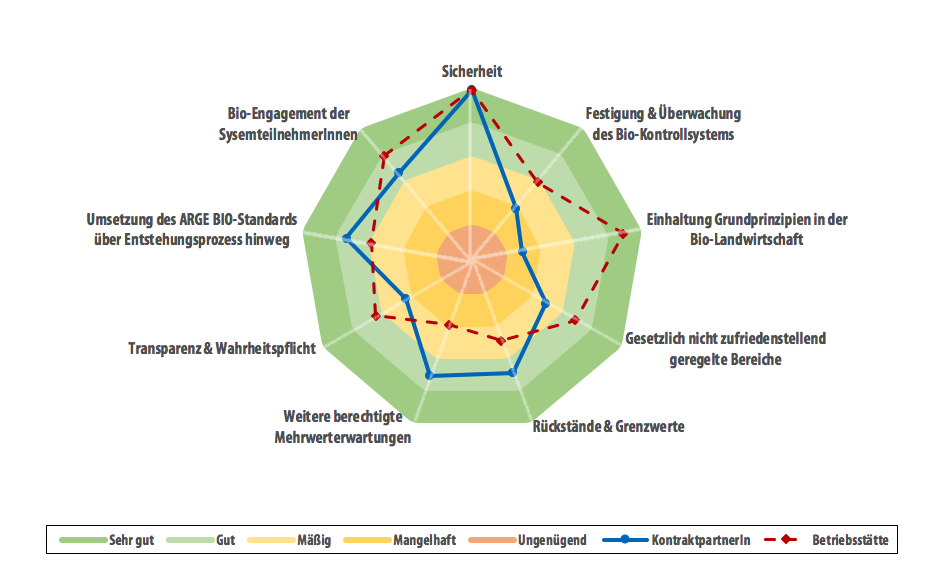
Eine Bewertung von Modul 1 und 2 des ARGE BIO-Standards kann wie abgebildet aussehen:
Was ist das Ergebnis der Prüfung?
Nach Prüfung gemäß ARGE BIO-Standard werden die Produkte zur Vermarktung freigegeben und nach verschiedenen Modulen bewertet.
Eine Bewertung nach Modul 1 und 2 des ARGE BIO-Standards kann wie abgebildet aussehen:
Was ist das Ergebnis der Prüfung?
Nach Prüfung gemäß ARGE BIO-Standard werden die Produkte zur Vermarktung freigegeben und nach verschiedenen Modulen bewertet.
Eine Bewertung nach Modul 1 und 2 des ARGE BIO-Standards kann wie abgebildet aussehen:
Welchen Nutzen hat der ARGE BIO-Standard?
Welchen Nutzen hat der ARGE BIO-Standard?
Welchen Nutzen hat der ARGE BIO-Standard?
Weiterentwicklung des ARGE BIO-Standards
Der ARGE BIO-Standard ist ein lebendes Werk, das laufend weiterentwickelt wird. Ziel ist es, Schwachstellen und geänderte Erwartungen an Bio zu identifizieren und zu überprüfen ob die Aufnahme weiterer Regelungen in den Standard notwendig ist.
Der Standard wird unter anderem durch den Austausch mit unseren Tochterorganisationen entwickelt.
Dabei orientiert sich die ARGE BIO an folgenden Grundwerten:
Weiterentwicklung des ARGE BIO-Standards
Der ARGE BIO-Standard ist ein lebendes Werk, das laufend weiterentwickelt wird. Ziel ist es, Schwachstellen und geänderte Erwartungen an Bio zu identifizieren und zu überprüfen ob die Aufnahme weiterer Regelungen in den Standard notwendig ist.
Der Standard wird unter anderem durch den Austausch mit unseren Tochterorganisationen entwickelt.
Dabei orientiert sich die ARGE BIO an folgenden Grundwerten:
Weiterentwicklung des ARGE BIO-Standards
Der ARGE BIO-Standard ist ein lebendes Werk, das laufend weiterentwickelt wird. Ziel ist es, Schwachstellen und geänderte Erwartungen an Bio zu identifizieren und zu überprüfen ob die Aufnahme weiterer Regelungen in den Standard notwendig ist.
Der Standard wird unter anderem durch den Austausch mit unseren Tochterorganisationen entwickelt.
Dabei orientiert sich die ARGE BIO an folgenden Grundwerten: